Complete written learning material for the theory behind all 17 basic-knowledge modules, organised the way the exam is: by EASA syllabus paragraph, for licence categories A, B1, B2, B2L and B3. One payment, 12 months of access to comprehensive notes for every module, the theory companion to your practice questions.
296 notes across all 17 modules, 9,500+ pages, kept up to date with the current regulations
Written out in full: worked examples, typeset formulas, diagrams, tables and exam tips
Watch mode: narrated slides, section by section
The first paragraph of every module is free to read
€99.99for 12 months of online access. Offline PDF books €299.99.
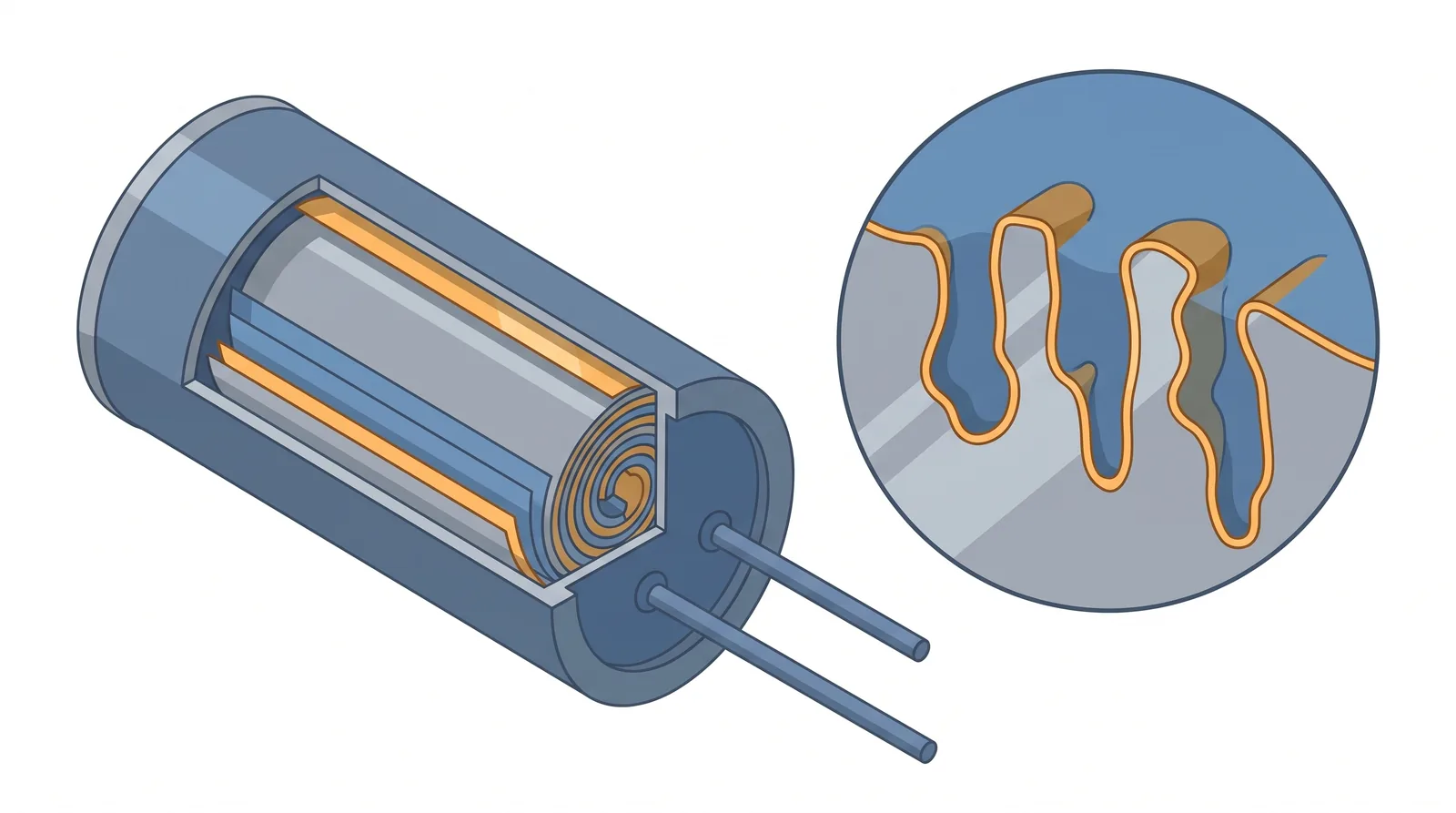
A capacitor stores energy in an electric field between two conductive plates separated by an insulator (dielectric). Capacitors are found throughout aircraft systems — in power supply filtering, radio tuning circuits, timing circuits, and surge protection.
Etched anode foil lined with thin oxide; the liquid electrolyte fills every pit to contact the whole area.
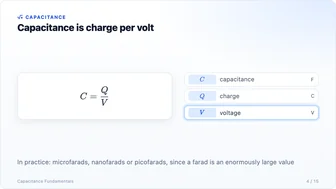
KEY FORMULAC = Q / V
Module 3 — Electrical Fundamentals
3.4 — Generation of Electricity
Practice · 32 questions Watch · 67 min
Electricity can be generated by several different methods, each converting a different form of energy into electrical energy. Aircraft systems exploit many of these methods — from generators (magnetism) and thermocouples (heat) to piezoelectric sensors (pressure).
Static dischargers19 / 24The discharge path runs from the structure into the air
EXAM TIPA fuel probe measures; it is not a method of generating electricity.
Module 3 — Electrical Fundamentals
3.3 — Electrical Terminology
Practice · 31 questions Watch · 52 min
This section defines the fundamental electrical quantities and their units. A clear understanding of voltage, current, resistance, and related concepts is essential before studying circuits, components, and systems in the remaining sections of Module 3.
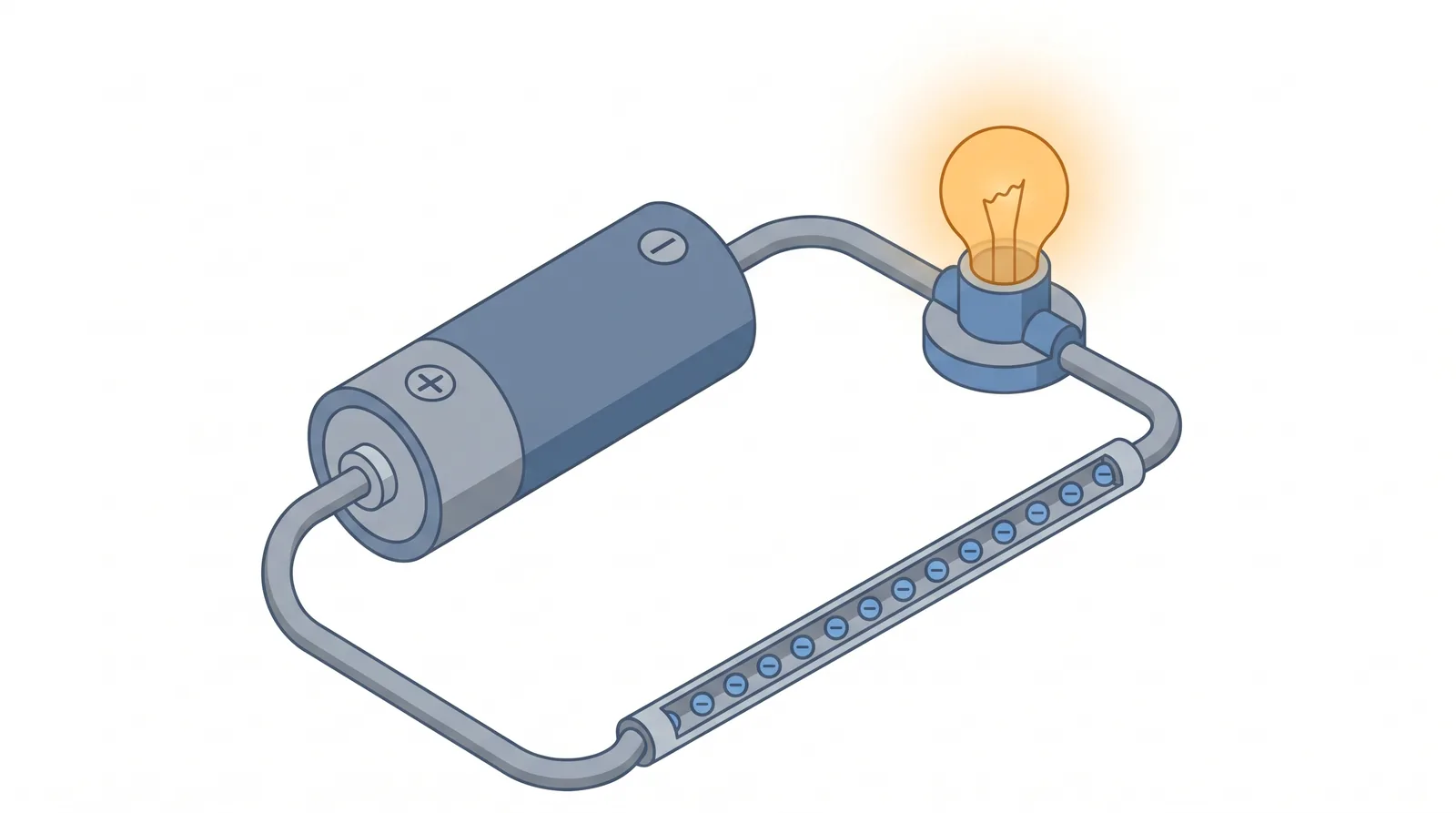
A cell lighting a lamp: the metal wire is full of free electrons, the carriers that electron flow describes.
KEY FORMULAV = I × R
Module 3 — Electrical Fundamentals
3.2 — Static Electricity and Conduction
Practice · 38 questions Watch · 84 min
Static electricity deals with electric charges at rest, as opposed to current electricity where charges flow continuously. Static build-up on aircraft can damage sensitive electronics, cause radio interference, and even pose ignition hazards during refuelling.
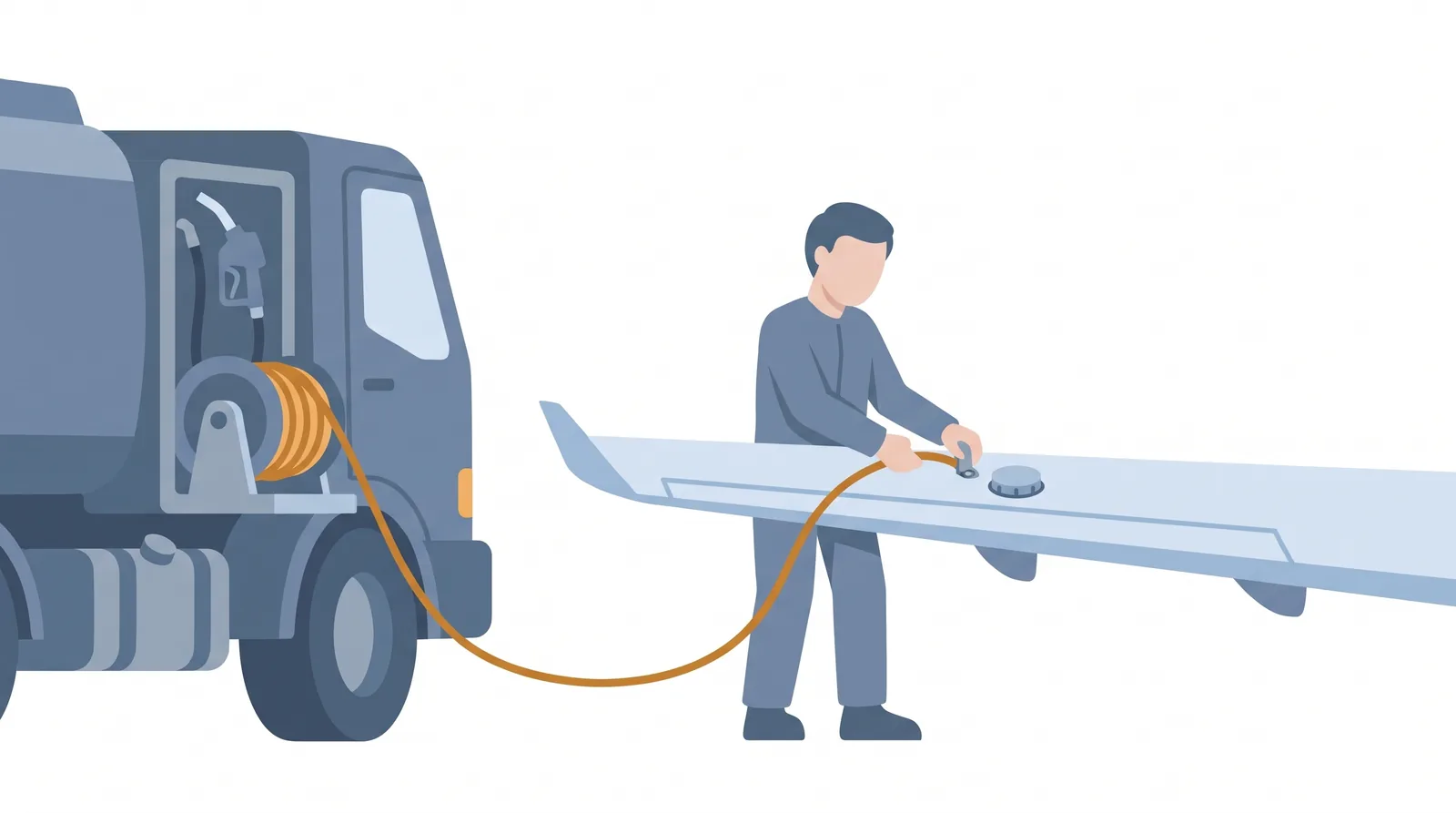
Bond first: the bonding cable joins bowser and aircraft before any filler cap is opened.
WARNINGConnect the bonding cable before opening any filler cap.
Module 3 — Electrical Fundamentals
3.1 — Electron Theory
Free preview Watch · 57 min
Electron theory explains the fundamental nature of electricity by examining atomic structure and the behaviour of electrons. This section lays the groundwork for understanding how electrical current flows and why different materials conduct electricity to different degrees.
Set that against the gaps7 / 25The gap compared with the thermal energy available
Thermal energyAvailable at room temperature
Silicon gapRoughly forty times: a small fraction cross
Every module is broken down the same way as the official syllabus, one note per syllabus paragraph. Study in the order you will be examined, jump straight to a weak topic, and always know which syllabus reference you are looking at.
Module 3 — Electrical fundamentals
18 study notes, one per syllabus paragraph
3.1Electron Theory91%
3.3Electrical Terminology77%
3.9Capacitance/Capacitor58%
Study note9 sections, 14 worked examples, 15 key formulasRead Watch
Chapter drillQuestions from 3.9 and nothing elsePractice 10
Ranked #1 in your plan for today58% over 24 answers, below the 75% pass mark
The note for that syllabus paragraph, written out in full: worked examples in their own boxes, typeset formulas, diagrams and tables, and tip and warning callouts on what examiners catch people out on.
2
Or watch it
Switch to Watch and the note plays as narrated slides, section by section, each point lighting up as it is read out.
3
Drill the chapter
Every note opens its chapter drill: 10, 20 or 30 questions from that paragraph only, with a quiz subscription.
4
Know what to read next
The Intelligent Progress Center reads how you answer, ranks your weakest syllabus chapters and links you straight to that chapter's note.
EASA Part66 study notes: frequently asked questions
What are EASA Part66 study notes?
They are complete written learning material covering the theory of all 17 EASA Part66 modules, organised by EASA syllabus paragraph. They explain each topic in full — with worked examples, formulas, diagrams and exam tips — to prepare you for the aircraft maintenance licence exams in categories A, B1, B2, B2L and B3.
Which modules and licence categories do the notes cover?
All 17 basic-knowledge modules are covered, across licence categories A, B1, B2, B2L and B3. You get every module in one purchase, so the notes work whichever category you are studying for.
Can I preview the notes before I buy?
Yes. The first paragraph of every one of the 17 modules is free to read, so you can see the real depth and style of the notes before deciding to buy. No payment is needed to preview.
What is the difference between Online Access and the Offline PDF?
Online Access (€99.99) lets you read all notes in your browser on any device, always kept up to date, and needs a free account. The Offline PDF (€299.99) is a downloadable ZIP holding one bookmarked, print-friendly PDF book per module — 17 books, 9,500+ pages — which you can study without internet and without an account. Online Access is one payment for 12 months of access; the Offline PDF is a one-time purchase that is yours to keep.
Do I also need a quiz subscription?
They serve different jobs. The study notes are where you learn the theory (one payment for 12 months of online access); the quiz subscription is where you practise exam-style questions. Many members use both — notes to understand each topic, questions to test that they are above the 75% pass mark.
Are the study notes kept up to date with the current EASA syllabus?
Yes. The notes are written against the current EASA Part66 syllabus and maintained as the regulations change, so you are always studying the material that reflects the exam.
We use essential cookies to keep you signed in, plus anonymous analytics to understand how the site is used. Cookie-based analytics is set only with your consent. See our
Privacy & Cookie Policy.